
On its own, no. A two-day Botox training course can teach the fundamentals of neurotoxins and dermal fillers, and for a licensed medical professional, it is a reasonable place to start. It is not enough to make someone a safe, independent injector. Most introductory courses give students a few hours of hands-on training, often on just a handful of live cosmetic models, under an instructor who corrects every move. Safe injecting depends on what happens after the weekend ends: supervised experience across many different faces, a deep understanding of facial anatomy, the ability to recognize and manage complications, and real medical oversight. For patients, that means the certificate on the wall tells you much less than the questions you ask before you book.
What a Two-Day Neurotoxin and Filler Training Course Covers
Introductory Neurotoxin and filler courses typically run one to three days and combine classroom instruction with a hands-on session. The theoretical knowledge portion usually covers what you pay the company running this short class, how botulinum toxin and fillers work, patient assessment and consent, injection techniques, safety protocols, and an overview of possible complications. Most programs like this does not have enough time to train completely, therefore sending out inexperienced students to the world open to major problems and liability.
The hands-on portion is where students inject live models in the most common treatment areas: forehead lines, frown lines, and crow’s feet for Botox, and lips or smile lines for filler. Some courses advertise that each student treats three or so models over the course of the day. That is valuable practical experience, but it is a small sample. Every model has been screened for the course, the instructor is standing at the student’s shoulder, and the goal is to learn the basic movements, not to master them.

Why a Certificate Doesn’t Make a Competent Injector
The word certified sounds official, and that is part of the problem. A certificate shows that someone attended and completed a very short training program. It is not a state license, and there is no single national standard that every training provider has to meet. Two certificates can represent very different amounts of instruction, supervision, and practice.
Skill with cosmetic procedures comes from repetition and judgment. An experienced practitioner has seen how different faces respond: strong forehead muscles that need a different approach, a brow that already sits low, asymmetry the patient hasn’t noticed, or the results of treatment done somewhere else. They know when a smaller dose is wiser, when an area should be left alone, and when a patient’s goals don’t match what an aesthetic treatment can realistically do. That level of expertise can’t be absorbed in two days.
Where Limited Hands-On Experience Shows Up
Most toxin and filler treatments go smoothly, and many side effects are mild and temporary, until they don’t. A major concern of an inexperienced injector is, injecting into the wrong area and causing necrosis or worse, loss of eyesight. The concern with minimal training is how an injector handles the cases that don’t follow the textbook.
With Neurotoxins
Understanding toxin takes more than knowing where to place the needle. Poorly placed injections most often cause a drooping eyelid, a heavy or flattened brow, an uneven smile, necrosis (tissue dying), injecting into the orbital nerve and causing loss of eyesight. Some wear off over a few months, some cause permanent damage, but that is a long time to live with a result you didn’t want. Avoiding them depends on knowing where each small muscle sits, how deep it lies, and how far the product is likely to spread from the wrinkle being treated.
With Dermal Fillers
Dermal filler treatments carry a more serious, though rare, risk called vascular occlusion. It happens when filler enters or presses on a blood vessel and cuts off blood flow. Published estimates put the incidence somewhere between 0.001% and 0.05% of filler treatments, but the consequences can include skin death and, when vessels near the eye are involved, permanent vision loss. Areas such as the nose, the space between the brows, and the forehead are considered higher risk.
Vascular occlusion is a medical emergency, and the first minutes matter. A prepared injector knows the warning signs, such as sudden blanching, unusual pain, or mottled skin, and stops immediately. They keep hyaluronidase, the enzyme that dissolves hyaluronic acid filler, on hand and know how to use it, and they have an emergency plan in place. A review in the Aesthetic Surgery Journal points to the growing number of injectors without advanced training as a possible reason complications are being reported more often, while noting that even highly experienced practitioners are not immune. A weekend course can introduce this material. It cannot give someone the calm, practiced response an emergency demands.
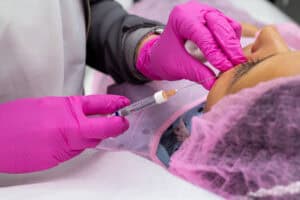
What Texas Requires for Cosmetic Injections
Texas treats cosmetic injections as the practice of medicine. A physician may delegate a Botox injection or filler treatment to a properly trained person, but the Texas Medical Board’s rules attach conditions to that delegation:
- The supervising physician must be trained in the procedures being delegated.
- The physician must make sure the person who will administer Botox or filler has appropriate training.
- There must be a signed written protocol for the procedures.
- A physician, physician assistant, or nurse practitioner must evaluate the patient before treatment.
- At least one person trained in basic life support must be available on site.
- The facility must post a notice identifying the supervising physician.
What the rules don’t do is set a minimum number of training hours or supervised injections. A 2025 bill proposed a state certificate requiring 40 hours of foundational training and at least 50 supervised injection procedures, but it did not become law. In practice, the depth of an injector’s training depends largely on the injector and on how seriously the supervising physician takes the responsibility of delegation.
What Should Happen After Completing the Course
For a responsible practitioner, completing the course is the start. The skills necessary to perform Botox will come from additional practice under supervision, ideally with mentorship from experienced practitioners who review each treatment plan and result. A new injector can gain more experience that way without learning at a patient’s expense.
Continuous education matters too, because aesthetic medicine is constantly evolving. New neuromodulators and fillers reach the market, each with its own dosing and behavior, and complication management keeps improving. Advanced practitioners go back for training in anatomy, specific products, and emergency response, and they work in a practice where a physician is actively involved and written protocols are followed.
Time matters as well. An injector who has treated patients for many years has built up something no course can hand out: a mental library of faces, responses, and outcomes that guides every decision about dose and placement.
Questions to Ask Before Your Next Aesthetic Treatment
You don’t need medical training to vet an injector. A few direct questions will tell you a great deal about patient safety:
- How long have you been performing injections, and how many Botox treatments like mine do you do each month?
- What training have you completed beyond your first Botox training course?
- Who is your supervising physician or nurse practitioner, and how involved are they?
- What would you do if I had a complication such as a vascular occlusion, and do you keep hyaluronidase in the office?
- Are your products FDA-approved and purchased from authorized distributors?
A qualified injector will welcome these questions and answer them clearly. Hesitation, vague answers, or a quick change of subject are reasons to keep looking.
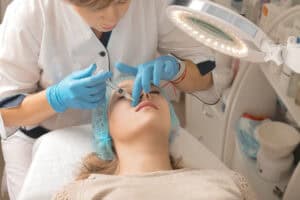
Choose an Injector Whose Training Didn’t End After One Weekend
A two-day course can open the door to aesthetics, but your face deserves an injector with far more behind them than a weekend of training. Years of supervised practice and real medical oversight are what make treatment safe and effective.
Lisa Rux is a medical aesthetician with more than 26 years of experience in medical skin care and extensive experience with neuromodulators and dermal fillers. She holds numerous certifications in advanced injectable training and is one of 135 medical professionals in Texas trained and licensed in the patented ArqueDerma Artistic Restoration Lift and Microtox technique. Her medical spa is supervised by a doctor and a nurse practitioner. To discuss neurotoxins and filler options with an experienced injector, call (940) 231-5636 to schedule a consultation.